
Electric Vehicle Industry Powers Into 2025 With Innovation, Incentives, and Infrastructure Growth
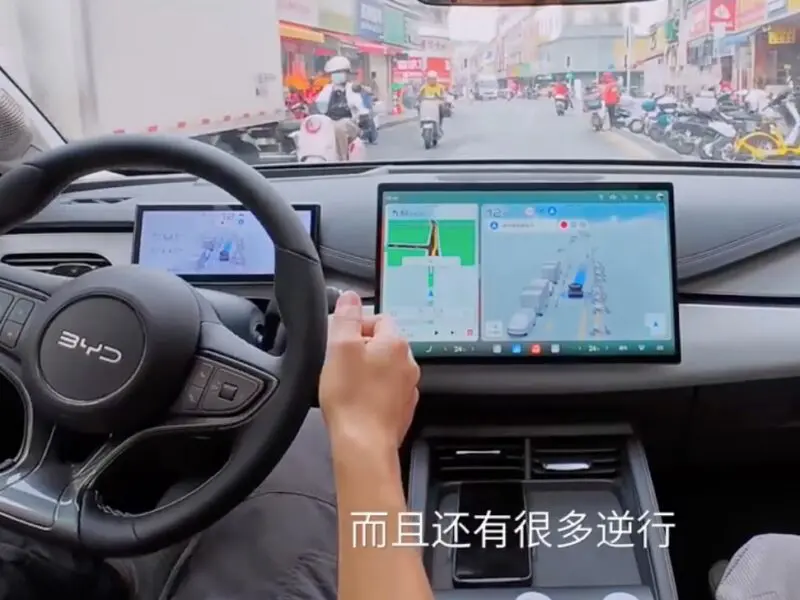
EV Market Overview: Acceleration Into the Next Decade
The global electric vehicle (EV) landscape is accelerating into 2025 with unprecedented momentum. After years of steady growth, the transition from internal combustion to electric mobility has become one of the defining industrial transformations of our time. From breakthroughs in battery chemistry to massive expansions of fast‑charging networks, nearly every segment of the EV ecosystem—manufacturers, suppliers, regulators, and consumers—is experiencing change at full charge.
Policy and Incentives Fueling Expansion
Governmental actions remain the engine driving adoption rates. Major economies in North America, Europe, and Asia have introduced more robust incentive packages, often coupled with stricter emissions standards. These incentives are not confined to tax credits for new buyers; they extend to used‑EV support programs, grants for fleet electrification, and investment subsidies for gigafactories that produce advanced batteries.
In the United States, the latest federal funding round provides billions for domestic battery production, aiming to reduce dependence on overseas supply networks. Meanwhile, the European Union has tightened its CO₂ fleet targets, spurring automakers to accelerate their EV lineups under penalty threats. Across Asia, China continues to leverage its manufacturing prowess, introducing localized incentives that favor domestic brands while still attracting foreign automakers to participate in its rapidly evolving market.
Automaker Strategies and New Launches
Virtually all major automakers have announced refreshed EV roadmaps for 2025 and beyond. Legacy manufacturers are expanding their all‑electric portfolios across vehicle categories—sedans, pickup trucks, and performance SUVs—while newer startups are challenging assumptions about range, price, and design.
Several companies have rolled out next‑generation electric platforms designed for flexibility and scale. These architectures allow faster development cycles and shared components among multiple models, reducing cost per unit and simplifying manufacturing lines. These unified platforms also enable easier software integration, an area where EV makers are competing vigorously to provide superior infotainment, driver assistance, and energy management systems.
Battery Innovations and Range Advances
Perhaps the most crucial breakthroughs lie within the battery sector. Solid‑state technology is edging closer to commercial readiness, promising higher energy density, faster charging, and improved safety over liquid‑electrolyte cells. Developers are exploring silicon‑rich anodes and lithium metal configurations that could boost range by 25–40% compared to today’s typical lithium‑ion packs.
Additionally, recycling and circular‑economy approaches are gaining traction. New processing techniques can recover over 90% of critical materials such as nickel, cobalt, and lithium, addressing both cost concerns and sustainability targets. As production scales up, reduced reliance on newly mined metals could make EV manufacturing far greener and less geopolitically constrained.
Charging Infrastructure Expands and Upgrades
Another highlight in recent developments is the dramatic growth in global charging infrastructure. Multi‑gigawatt networks are being deployed along major highways, urban areas, and even rural corridors. Collaboration between utilities, automakers, and private charging firms has resulted in standardized plug formats and interoperable payment systems, simplifying the user experience.
Ultra‑fast chargers—those delivering 250 to 350 kilowatts—can now replenish substantial range in under fifteen minutes, addressing one of the lingering consumer hesitations. At the same time, smart charging software is enabling grid balancing by allowing EVs to supply stored energy back into local networks during peak demand, effectively turning them into mobile energy assets.
Market Trends and Consumer Behavior
Data shows that EV adoption continues to climb across income segments. Lower battery costs and increased leasing options have broadened accessibility, while rising fuel prices and improved public awareness of climate challenges further tilt the balance toward electrification. Consumer mobility data suggest that younger buyers, in particular, see EVs as lifestyle statements representing both environmental responsibility and technological sophistication.
Interestingly, there’s a parallel surge in pre‑owned EV markets. As early models depreciate, used‑EV buyers are entering the scene, extending the life cycle of vehicles and creating new opportunities for service networks dedicated to battery diagnostics, refurbishing, and certification.
Logistics, Supply, and Infrastructure Challenges
Nevertheless, the path forward is not without obstacles. Supply chain vulnerabilities—particularly regarding critical minerals and semiconductor availability—continue to stress production schedules. Logistical bottlenecks affect everything from raw material mining to finished vehicle delivery. Furthermore, recycling infrastructure must scale quickly to match anticipated waste streams once the first large wave of EV batteries reaches end of life.
Grid readiness is another pressing matter. As EV penetration rises, utilities must adapt to growing electricity demand while ensuring stability. This has prompted large‑scale investments in renewable generation and energy storage. Many regional grids are experimenting with time‑of‑use pricing and smart metering to incentivize off‑peak charging cycles.
Outlook: The Road Ahead
Analysts consistently project double‑digit compound annual growth for EV sales through 2030, corresponding to tens of millions of vehicles produced annually worldwide. Market leaders are developing next‑generation models with longer ranges, lower costs, and superior environmental performance. Mergers, partnerships, and cross‑industry collaborations are expected to intensify as software, data analytics, and energy management become core differentiators.
For consumers, the result will be more choice, faster charging, and increasingly competitive pricing. For cities and nations, the electrification drive represents both a sustainability challenge and an opportunity to redefine mobility from the ground up. The coming years will likely cement EVs not merely as alternatives to gasoline vehicles, but as the new standard for transportation in a carbon‑constrained world.