
 Buy & Sell
 All EV Sales
 Explore
 Account
 Back to News
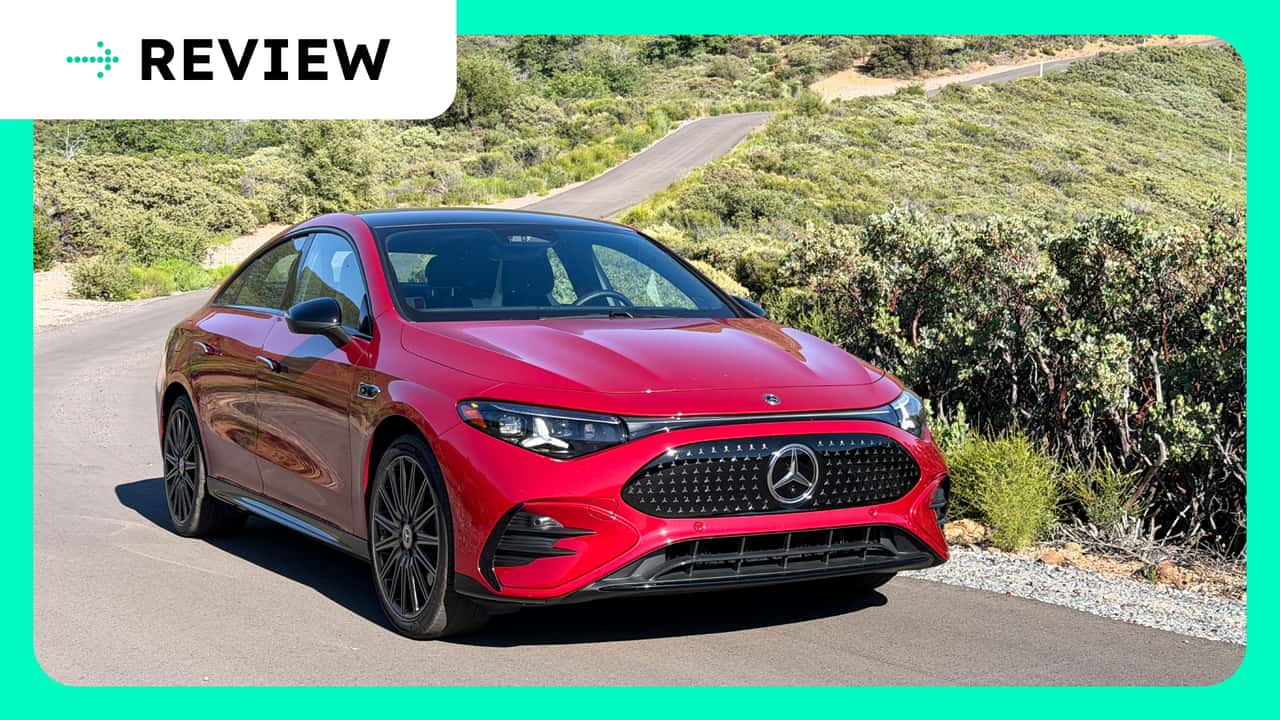
 The 2026 Mercedes CLA 250+ marks a pivotal moment for the brand’s transition to fully electric, software-defined vehicles. Out go the earlier EQ-series EVs and their mixed reception; in comes a wave of sleek models built around 800-volt architecture and an entirely new digital chassis philosophy. On paper, the CLA 250+ with “EQ Technology” promises all the refinement and innovation Mercedes is known for, packaged within an aerodynamic four-door coupe body. But as with many modern Benz designs, real-world experience exposes a tug-of-war between engineering brilliance and overcomplicated digital excess.
A Joy to Drive, Even Without Big Power
The CLA 250+ offers rear-wheel drive and 268 horsepower from its single motor, backed by 247 lb-ft of torque. A two-speed transmission—an intriguing rarity among EVs—helps maintain power efficiency at higher speeds and keeps highway driving lively. While its 0–60 mph time of 6.6 seconds isn’t headline-grabbing, the CLA’s road manners tell a different story. The light, eager steering and precisely tuned chassis make it a joy to pilot on twisty roads. In a world filled with heavy, overpowered EVs, its nimbleness feels refreshing. With playful acceleration and a confident stance, it sits comfortably between a sporty sedan and a relaxed grand tourer.
That sense of composure is matched by ride quality. The suspension tuning feels mature—absorbing bumps gracefully without compromising driver engagement. And while it’s not a rocket ship, the readily available instant torque ensures merging and overtakes are effortless. The optional Burmester audio system adds another layer of sensory pleasure, delivering clear, immersive sound that suits long drives or spirited cruises alike.
Range and Charging Confidence
Range is another strong suit for the CLA 250+. Depending on configuration, it can achieve up to 374 miles on the U.S. EPA cycle, dropping to around 317 miles when equipped with larger 19-inch wheels. Even the all-wheel-drive CLA 350 variant stays above 300 miles of range, which places Mercedes comfortably among competitive EVs in this segment.
The 800-volt electrical platform supports charging speeds up to 320 kW, allowing the battery to jump from 10% to 80% in roughly 22 minutes under ideal conditions. At lower-voltage chargers, output is capped near 100 kW, meaning Tesla Superchargers and other 400-volt networks charge a bit slower. Curiously, Mercedes has chosen to retain separate ports for AC and DC charging—one for J1772 slow charging and one for the NACS fast charge—rather than integrating both into a single plug, as most rivals do. The rationale seems to be cross-compatibility with existing Mercedes home chargers, but it introduces unnecessary complexity.
Tech Overload Meets Everyday Frustration
Mercedes has long been known for its luxurious cabins and intuitive ergonomics, but the CLA EV underscores the brand’s current overemphasis on screens and digital features. The dashboard is dominated by the wide “Superscreen,” which looks impressive at first glance but often feels underused. The passenger-facing portion tends to act as little more than a glorified screensaver unless someone actively engages it, and the absence of physical controls beyond the essentials can frustrate.
A glaring oversight is the lack of simple audio controls on the steering wheel. While a tactile volume knob has mercifully replaced earlier touch-sensitive sliders, Mercedes has inexplicably removed the skip-track button—something the brand mastered decades ago. Unless one dives into touchscreen menus or uses the sometimes-clumsy voice assistant, changing songs can become a task instead of a tap.
The digital assistant itself is ambitious, integrating Google Gemini and Bing for conversational queries. In practice, though, it falters. Commands like “find vegetarian restaurants” or “show chargers near my destination” routinely yield misdirected or incomplete results. While it handles basic in-car functions—climate adjustments, for instance—it refuses to open windows or change driving modes, often citing “regulatory restrictions.” Mercedes promises that updates will expand its capabilities, but for now, it feels half-baked.
Comfort, Style, and Some Odd Design Choices
Stylistically, the CLA 250+ remains a striking car. Its coupe-like silhouette and pillarless doors exude sportiness, and the interior detailing—illuminated trim lines, ambient lighting, and premium materials—project high-end appeal. Unfortunately, certain cost-cutting choices undermine the impression. Glossy plastic on the center console feels out of place in a vehicle that can top $64,000 as tested. Likewise, the window control setup mirrors Volkswagen’s divisive approach, using just two main switches and a toggle to control front and rear glass. Worse still, rear windows don’t fully drop and lack auto-up functionality, diminishing the open-air experience.
Even small annoyances pile up. Repeated digital warnings about forgotten phones, or temporary error messages claiming driver assistance systems are unavailable, reveal fragile software calibration. These self-clearing alerts don’t inspire confidence in long-term reliability. Still, when functioning, Mercedes’ highway assist and adaptive cruise impress with natural steering and smooth lane centering, hinting at the expertise behind the brand’s semi-automated systems. An upcoming update called “Drive Assist Pro,” powered by Nvidia’s software, promises more advanced point-to-point navigation under driver supervision—but it isn’t yet active.
A Preview of the Mercedes Future
The CLA 250+ epitomizes Mercedes-Benz’s current trajectory: luxurious, high-tech, and software-driven—sometimes to a fault. It’s a car that dazzles with innovation yet occasionally stumbles on execution. The fundamentals—ride quality, handling balance, and driving comfort—are excellent, signaling engineering excellence beneath the digital sheen. But the company’s push toward subscription-based “digital extras” and feature unlocks feels contrary to the effortless luxury ethos that once defined the brand.
Ultimately, the CLA 250+ is both a triumph and a cautionary tale. It delivers long range, fast charging, modern design, and undeniable presence. Yet its reliance on menus and monetized features, combined with a few baffling ergonomic missteps, keeps it from embodying the pure, understated perfection of past Mercedes sedans. For buyers enamored with the tech-forward vision of the next generation, it’s a bold step into the future. For purists, it’s a reminder that progress sometimes leaves simplicity behind.
All EV Sales Research Team
6/17/2026