
Global Electric Vehicle Momentum Surges Amid Breakthroughs and Policy Shifts
The Acceleration of Electric Mobility
The electric vehicle (EV) sector is entering a decisive new phase as global production scales up, battery costs drop, and governments sharpen their climate commitments. What was once a niche industry centered on early adopters is now rapidly transforming the automotive landscape. Companies across Asia, Europe, and North America are expanding manufacturing capacity, updating their lineups, and preparing for greater volatility in raw material markets.
At the heart of this movement is an alignment of technology and regulation. Battery chemistries are diversifying beyond the dominance of lithium-ion, with solid-state designs, sodium-ion variants, and hybrid chemistries looking increasingly viable for mass-market deployment. Meanwhile, the build-out of public and private charging infrastructure is catching up with EV sales curves, reducing one of the primary barriers to consumer adoption.
Battery Innovation Gains Pace
Recent breakthroughs in battery density, charging efficiency, and recyclability are reshaping cost structures. Leading research groups in Japan and Germany have reported stable energy densities exceeding 400 Wh/kg, while solid-state labs in the United States are projecting commercial readiness before 2030. Moreover, the steady fall in lithium carbonate prices during early 2024 has reopened investment enthusiasm for compact EVs and light commercial vehicles.
What makes this all the more significant is the parallel development in recycling and second-life storage. Decommissioned EV batteries are being repurposed into stationary energy storage systems for solar and wind projects, improving their total lifecycle value and reducing waste. This integrated approach not only strengthens environmental credentials but also helps balance intermittency in renewable energy grids.
Policy and Industry Realignment
The policy environment is also shifting quickly. Several major economies have enacted stricter emissions requirements that are accelerating the retirement of internal combustion engines. Subsidies for EV buyers are gradually evolving into incentives for manufacturers to localize battery and component production, tying environmental goals to job creation and industrial resilience.
In 2024, the European Union rolled out its Zero Emission Vehicle Mandate, requiring automotive manufacturers to achieve a 55% EV share in new sales by 2030. Meanwhile, in the United States, the federal government’s Inflation Reduction Act and various state-level clean transportation programs are encouraging domestic production of batteries, critical minerals, and high-power charging equipment. Across Asia, China remains the dominant player, continuing to export not only EVs but the entire industrial ecosystem—cells, cathodes, anodes, and even software stacks—to developing markets.
This convergence of regulatory ambition and technological maturity is leading to deeper cross-border collaboration and, occasionally, competition. As EV adoption spreads, traditional automakers find themselves repositioning to remain relevant amid the fast pace of change driven by both startups and tech giants.
The Charging Revolution
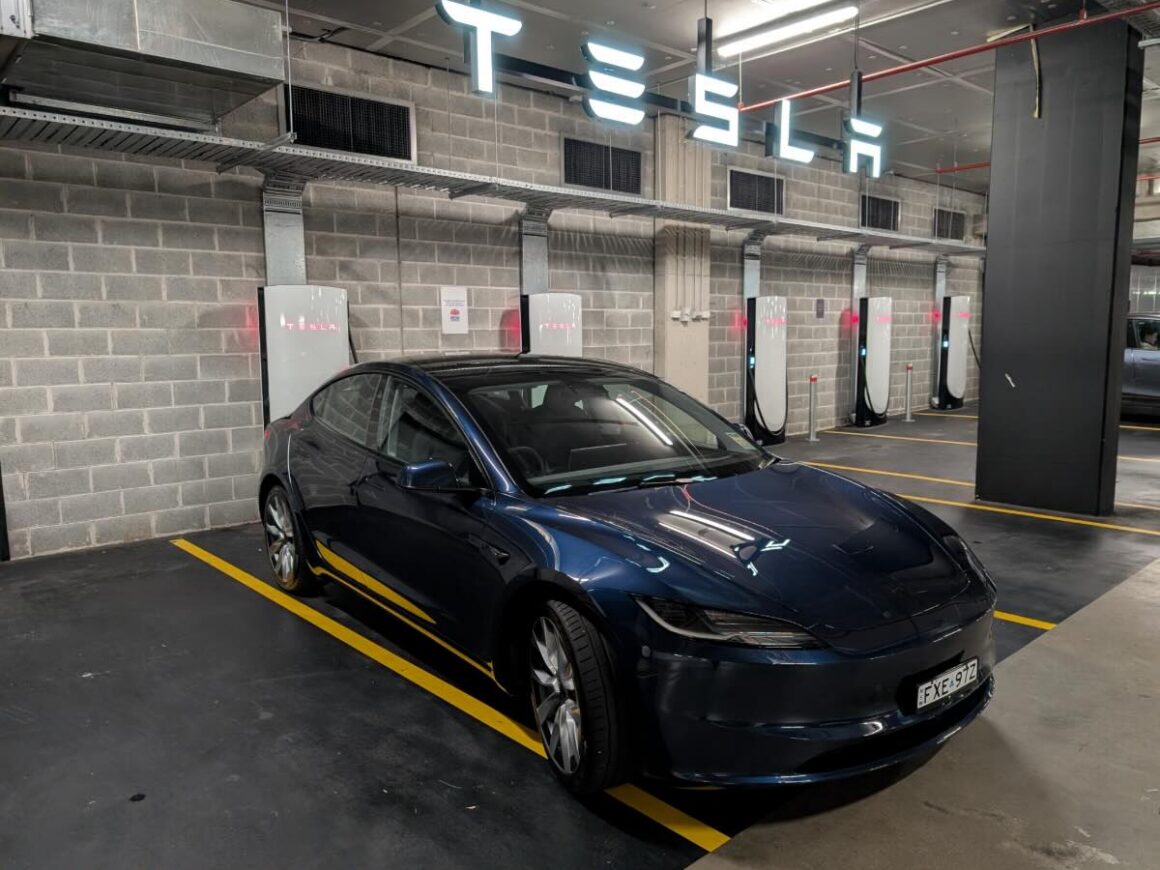
Expanding the global charging network remains essential to sustaining EV momentum. Private companies and utilities alike are racing to deploy fast chargers along main transit routes, suburban clusters, and urban centers. The 350 kW ultra-fast standard is becoming mainstream, enabling long-distance travel with recharge times similar to short coffee breaks.
Energy integration is another frontier. Many new charging hubs now run partially or entirely on renewable sources and utilize energy management systems that respond dynamically to grid demand. Vehicle-to-grid (V2G) capabilities are also emerging as an area of active testing: early pilot programs show that EV fleets could provide peak demand relief, generating revenue for drivers while supporting grid stability.
Supply Chain Pressures and Resilience
Despite rapid progress, bottlenecks persist. Supply of key minerals such as lithium, nickel, and cobalt remains tight, though efforts to diversify sourcing are bearing fruit. New mines are being opened across Africa and South America under stricter environmental and labor standards, while the recycling industry is beginning to reclaim a significant fraction of the required materials domestically.
Software and semiconductor shortages, less pronounced than in 2022, are still affecting production schedules. Manufacturers are reacting by simplifying chip architectures and forming long-term supply contracts with foundries. Integration between hardware and operating systems continues to advance, bringing seamless connectivity, improved driver assistance, and over-the-air updates into even entry-level EVs.
Cultural and Market Shifts
Consumer sentiment toward EVs has undergone a dramatic turn. Longer ranges, increased model variety, and transparent cost-of-ownership data are convincing more drivers to make the transition. Urban dwellers appreciate quieter operation and lower maintenance, while rural users benefit from the torque and instant power of electric drivetrains. Fleets—both commercial and municipal—are accelerating electrification timelines to meet sustainability targets.
The intersection of EVs with emerging mobility trends—autonomy, shared use, and subscription services—heralds a more flexible transportation model. In tandem, adjacent sectors such as energy storage, renewable generation, and smart city planning are forming a tightly interlinked ecosystem.
Outlook
Over the coming years, experts forecast continuing double-digit growth in EV adoption across all major markets. Strong technological foundations, improving economics, and consistent policy direction point toward enduring momentum. The transition, however, won’t be linear: raw material costs, international trade dynamics, and political cycles will inject variability into the pace of change.
Still, the trajectory remains clear. The convergence of innovation, infrastructure, and intent has set the stage for electric mobility to become not just an alternative mode of transport but the defining vehicle technology of the modern era. The story of the EV transition is no longer about a single company or country—it’s about a global reimagining of movement itself.