
 Buy & Sell
 All EV Sales
 Explore
 Account
 Back to News
 If you live in the Northern Hemisphere, chances are you’re dealing with sweltering summer temperatures. In older gasoline-powered cars, a broken air conditioner is usually just an inconvenience—you roll the windows down and cope. But in modern electrified vehicles, air conditioning issues go far beyond cabin comfort.
For electric vehicles (EVs), plug-in hybrids (PHEVs), and even standard hybrids, the A/C system isn’t just there to cool passengers; it’s also crucial for maintaining the proper operating temperature of the high-voltage battery and electronic components. When that system malfunctions, it can cause performance restrictions, slower charging, or even force the vehicle to shut down as a safety measure.
How A/C Systems Manage EV Batteries
At the heart of most EVs and PHEVs lies an intricate thermal management network that uses refrigerant and coolant to regulate temperatures. When these systems lose refrigerant pressure or fail to run efficiently, the results can be more than just a warm cabin. Battery cells depend on a precise thermal range to deliver consistent power and maintain longevity.
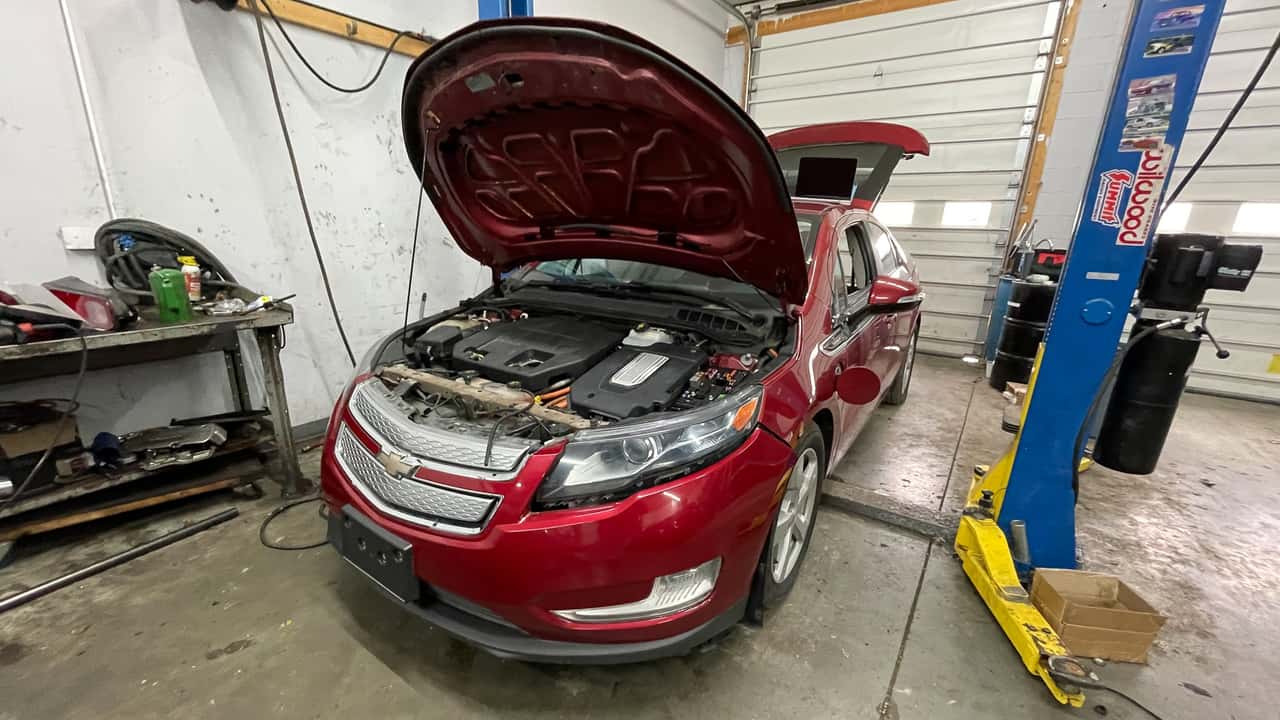
Take the Chevrolet Volt as an example. The first-generation Volt features a 17.1 kWh battery that uses both coolant and refrigerant lines to keep it within optimal temperatures. If the car’s system detects an issue—say, a low refrigerant charge—it won’t just disable the air conditioning; it may also restrict power delivery or prevent DC fast charging altogether. The fault code P0534 (A/C Refrigerant Charge Loss) that some Volt owners see isn’t a minor warning. It’s the car’s way of protecting its battery pack and electronics.
As manufacturers have moved toward thermal management strategies built around the A/C compressor, the role of refrigerant has become far more critical. Cars like Teslas and GM’s newest EVs use a shared network that cools the cabin, the battery, and power electronics. Any interruption in refrigerant flow or system pressure can trigger system protections, sometimes preventing the car from operating until the fault is addressed.
Why Fixing A/C Problems in EVs Isn’t Like Regular Cars
You might think topping up refrigerant is straightforward, but in electrified vehicles, it requires far more precision. The A/C compressor in most EVs and PHEVs runs on high voltage, meaning it’s connected directly to the vehicle’s battery system via heavy orange cables. That’s not the same setup as the belt-driven compressors found in traditional cars.
Because those compressors operate with electricity at potentially dangerous levels, they must use a specialized dielectric oil. This lubricant is non-conductive and prevents short circuits inside the compressor. Using the wrong oil—such as those included in many off-the-shelf refrigerant recharge kits—can cause a dangerous “loss of isolation,” essentially an electrical short within the A/C system.
This is why qualified automotive technicians who specialize in high-voltage systems advise against casual top-ups by untrained owners. Even though refrigerant types like R134a or R1234yf are common across both conventional and electrified vehicles, the oil mixed with those refrigerants must be compatible with high-voltage applications. Otherwise, a simple refill can damage expensive components, turning a $100 fix into a multi-thousand-dollar replacement.
The Expert Perspective
Shops such as the Electrified Garage, a specialist in EV systems, have confirmed that inadequate refrigerant levels can cause thermal management faults and even restrict hard acceleration or DC fast charging. Tesla vehicles, for example, use a heat exchanger that links refrigerant and battery coolant. If temperatures climb beyond safe limits, the car will automatically minimize power or prohibit charging until the temperature stabilizes. It’s all part of an intricate protection system designed to prevent permanent battery damage.
Similarly, General Motors acknowledges that all cooling systems in its EV lineup, like those in the Equinox EV, manage multiple subsystems—battery, cabin, and power electronics. Leaks or refrigerant loss can therefore trigger diagnostic codes that intentionally limit vehicle performance to protect the battery. These built-in safeguards are meant to prompt owners to get professional service quickly.
What EV Owners Should Know
Most EVs on the road today are still under warranty, meaning their owners won’t personally deal with refrigerant service for some time. But as these cars age and transition to secondhand markets, more DIY enthusiasts and independent repair shops will start maintaining them. That’s when the risk grows—many may not realize the significance of proper refrigerant handling in electrified systems.
For anyone considering working on an EV or hybrid’s A/C system themselves, it’s vital to check if the compressor uses high-voltage connections. If you see a thick orange cable attached to it, that’s a clear indicator of high-voltage operation—and of the need for dielectric oil only. Even a small amount of the wrong lubricant could short the compressor or trigger fault codes that shut down the car’s propulsion.
Understanding how deeply intertwined A/C systems are with battery management underscores how different EV maintenance is from that of conventional vehicles. An issue that once just meant sweating through traffic can now spell major repair bills or reduced driving capability.
For new EV owners and experienced tinkerers alike, awareness is key. Ensuring that an electric car’s thermal management system remains sealed, serviced properly, and refilled with the right materials isn’t just good for comfort. It’s essential for preserving battery health, maintaining reliable performance, and keeping your vehicle on the road safely for years to come.
All EV Sales Research Team
7/16/2026