
 Buy & Sell
 All EV Sales
 Explore
 Account
 Back to News
 EV News Roundup: Cheaper Charging, Longer Range, Smarter Cars, and a More Complicated Road Ahead
The electric-vehicle industry continues to expand in several directions at once. Automakers are launching more capable vehicles, charging companies are experimenting with less expensive installation models, and autonomous-driving developers are confronting the limits of current sensor technology. At the same time, the market remains uneven: some electric vehicles are becoming more practical and affordable, while others are arriving far above their originally advertised prices.
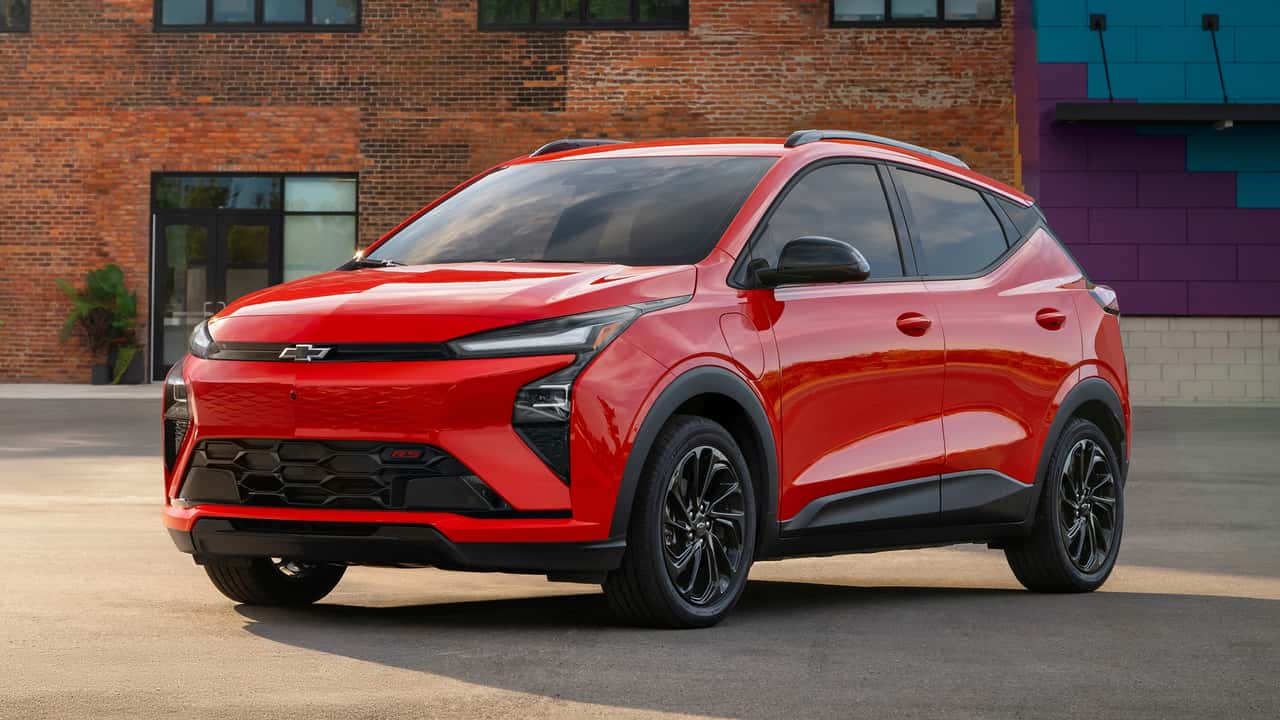
One of the clearest themes in the latest EV news is that electric vehicles are becoming more useful beyond simply replacing gasoline-powered transportation. The next Chevrolet Bolt, for example, is expected to be produced for only a limited period, but it represents a major improvement over the previous model. Newer vehicles such as the Bolt EV and Kia EV9 are also joining the growing group of models capable of vehicle-to-grid power sharing. This technology allows an EV to send electricity back to a home or the wider grid, potentially turning parked vehicles into temporary energy-storage systems.
The expansion of vehicle-to-grid capability reflects a broader change in how EVs are being viewed. They are no longer only cars that consume electricity. With the right equipment and utility support, they can also provide backup power, help balance demand, and make renewable energy easier to use. The technology is still developing, but its arrival in more mainstream vehicles could make it considerably more important in the coming years.
Charging infrastructure is also evolving, particularly in places where traditional installations are difficult. Voltpost is promoting chargers that attach to ceilings and walls rather than requiring extensive ground construction. That approach could reduce installation costs and make charging more practical for apartment buildings, garages, and other dense urban locations. Apartment residents are among the largest groups that struggle with home charging, so less invasive hardware could help address one of the biggest barriers to EV adoption.
Charging networks are expanding through partnerships as well. A new collaboration between a major charging company and a large gasoline-and-sandwich retailer demonstrates how EV charging is increasingly being added to familiar roadside destinations. Walmart is also continuing to install charging stations, including a recently opened site at its Supercenter in Monument, Colorado. These developments suggest that charging is gradually becoming part of ordinary retail and travel infrastructure rather than a specialized amenity found only at dedicated stations.
Range remains another major focus. A new Mercedes electric vehicle reportedly traveled close to 400 miles in a 70-mph range test, an important result because highway driving is generally more demanding than laboratory testing. Longer real-world range can reduce charging stops and make EVs more appealing to drivers who regularly travel long distances. Hyundai is also preparing an extended-range electric vehicle to be built at its Alabama plant in the United States. The model could offer a compromise between battery-electric driving and the convenience of longer-distance travel, particularly for customers who are not yet ready to rely entirely on public charging.
The competitive landscape is becoming more global and more complex. Xiaomi has revealed powerful in-house chips intended for products ranging from smartphones to electric cars, illustrating how consumer-electronics companies are moving deeper into automotive technology. The United States is also expected to receive an EV co-developed with Jeep’s parent company, Stellantis. Meanwhile, Genesis is hoping its GV90 can strengthen an electric-vehicle effort that has had a slower start than anticipated. The arrival of larger and more premium electric models could help broaden the market beyond compact crossovers and early-adopter vehicles.
Pricing, however, remains a significant challenge. The least expensive Cybertruck is now nearly twice the starting price Tesla presented when the vehicle was first announced in 2019. That gap highlights how inflation, production complexity, changing specifications, and market positioning can reshape the cost of a vehicle between announcement and delivery. It also underscores the difficulty of offering large electric trucks at mass-market prices.
Autonomous driving news remains equally mixed. Waymo is preparing to map Munich’s streets, with service expected to begin next year, marking another step in the international expansion of robotaxi technology. Yet one of the company’s leading engineers has argued that cameras alone are not sufficient for autonomous driving. The comment reflects an ongoing debate over whether reliable driverless operation requires a combination of cameras, radar, lidar, and other sensors rather than a camera-only approach.
Real-world incidents reinforce the concern. Videos shared on X reportedly show two vehicles failing to detect trees that had fallen across roads. At the same time, Tesla’s Full Self-Driving system has demonstrated surprising capability on unpaved roads, showing that advanced driver-assistance systems can sometimes handle conditions beyond ordinary city streets. These examples point to the uneven nature of current systems: impressive in some environments, but still vulnerable to unusual obstacles and edge cases.
Safety technology is improving in more conventional ways too. Volvo is promoting a system that can detect deer, people, and other hazards before a driver notices them. Such features may not attract as much attention as autonomous driving, but they could deliver meaningful benefits by reducing reaction times and helping drivers avoid collisions.
The industry is also discovering that working for an automaker does not automatically make someone a car enthusiast. Internal employee experiences have shown that many workers are unfamiliar with basic automotive concepts, creating opportunities for education and a stronger understanding of how ordinary customers approach new technology.
Finally, regulatory uncertainty continues to affect the market. One automaker has reportedly lost authorization to sell vehicles in the United States beginning with the 2027 model year. Whatever the specific circumstances, the development illustrates how certification, compliance, and government approval can determine whether an EV is commercially viable. Taken together, these stories show an industry moving forward rapidly—but still balancing innovation, affordability, infrastructure, safety, and regulation.
All EV Sales Research Team
8/27/2026