
 Buy & Sell
 All EV Sales
 Explore
 Account
 Back to News
 Tesla Model 3 Reaches 250,000 Miles With Original Battery and Motors
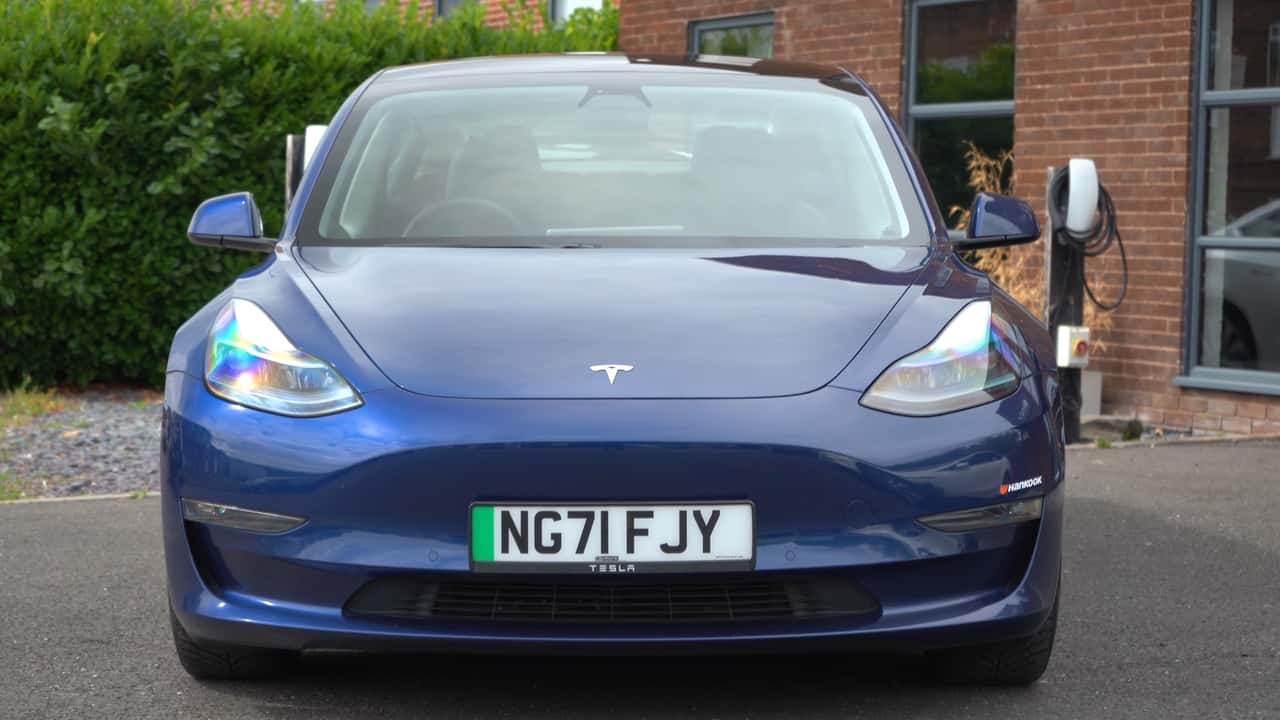
Electric vehicles are often praised for their lower running costs, but long-term ownership reports provide some of the clearest evidence of how they perform over time. One recently highlighted example is a 2021 Tesla Model 3 Long Range that has accumulated more than 250,000 miles while requiring remarkably little major maintenance.
The car was purchased used by Richard Symons, who operates a large second-hand Tesla showroom in the United Kingdom. Before entering his ownership, the Model 3 had been used as a taxi, meaning it experienced far more daily driving than the average privately owned vehicle. The experiment was intended to show how a high-mileage electric car would hold up after years of intensive use.
The results have been encouraging. Although the odometer has passed the quarter-million-mile mark, the Model 3 is still running its original battery pack and electric motors. According to the vehicle’s current condition, the battery retains approximately 84% of its original usable capacity. That represents some degradation, as would be expected after such extensive use, but the remaining capacity is still sufficient for practical daily driving.
On a warm summer day, the car can reportedly travel about 284 miles on a full charge in real-world conditions. That is less than the range it would have delivered when new, but it remains a useful figure for commuting, taxi work, and longer journeys. For many drivers, a range of nearly 300 miles would still provide more than enough flexibility for everyday travel.
The Model 3’s repair history has also been relatively limited. The most notable failure was the exterior speaker mounted in the front bumper, which stopped working prematurely and had to be replaced. Aside from that component, the vehicle has mainly needed routine wear-item maintenance.
That maintenance has included six sets of tires, several sets of windshield wiper blades, and various suspension bushings. These parts are expected to wear out on any vehicle, particularly one that has covered around 150 miles per day over an extended period. The car’s rear shock absorbers were also replaced, but the change was described as an upgrade intended to improve comfort rather than a repair forced by a serious failure. The original shocks were reportedly still serviceable.
Perhaps more striking is the fact that the car continues to use its original brake rotors, brake pads, brake fluid, and coolant. Electric vehicles typically rely heavily on regenerative braking, which allows the motor to slow the car while sending energy back to the battery. Because the conventional friction brakes are used less frequently, their components can last significantly longer than those on many gasoline-powered vehicles. The Model 3’s maintenance history offers a strong example of that potential benefit.
The car’s driving performance has also remained largely intact. Despite its mileage, it can still accelerate from a standstill to 60 miles per hour in approximately 3.8 seconds. There are reportedly no significant squeaks or rattles inside the cabin, and its everyday driving experience continues to feel close to that of a much newer vehicle.
Charging performance has not appeared to suffer dramatically either. During one charging session at a Tesla Supercharger, an 11-minute stop increased the battery’s state of charge by 30% and added approximately 85 miles of real-world range. While charging speed can vary depending on battery temperature, charger availability, and the vehicle’s state of charge, the result suggests that the high-mileage Model 3 remains useful for quick top-ups during longer trips.
The vehicle has averaged 4.15 miles per kilowatt-hour during its time with Symons. That is a strong efficiency figure, although the average speed and driving conditions behind the number were not disclosed. Charging costs have also been kept under control by using solar-generated electricity or charging overnight when electricity prices are lower. Those factors can make a considerable difference to an electric car’s overall operating expenses.
The Model 3’s experience illustrates why electric vehicles can be comparatively inexpensive to maintain. A battery-powered car has fewer moving parts than a conventional vehicle with an internal combustion engine, transmission, exhaust system, and fuel system. That does not mean EVs are immune to expensive failures, especially when it comes to batteries, power electronics, or other high-voltage components. However, the absence of many traditional mechanical systems removes several potential sources of maintenance and repair costs.
This Tesla is not necessarily proof that every electric car will reach 250,000 miles without major repairs. Individual results depend on battery chemistry, climate, charging habits, road conditions, and how the vehicle is used. Taxi service can also involve demanding daily operation, which makes this particular example notable.
Even so, it joins a growing collection of high-mileage EV stories. Owners of various electric models have reported reaching hundreds of thousands of miles with relatively few major problems. As more electric cars remain on the road for longer periods, those real-world experiences should provide a clearer picture of battery durability, long-term reliability, and the true cost of ownership.
For now, this heavily used Model 3 offers a compelling snapshot of what a modern EV can achieve. After more than 250,000 miles, it retains most of its battery capacity, continues to deliver strong acceleration, charges effectively, and has required little beyond ordinary maintenance and minor component replacements.
All EV Sales Research Team
9/12/2026