
 Buy & Sell
 All EV Sales
 Explore
 Account
 Back to News
 The electric vehicle market is entering a more complicated phase
The latest developments across the electric vehicle industry show a market that is still expanding rapidly, but no longer following a simple story of ever-higher range, faster adoption, and uninterrupted investment. Automakers, technology companies, policymakers, and charging providers are now balancing ambitious plans with financial pressure, regulatory uncertainty, infrastructure limitations, and increasingly demanding customers.
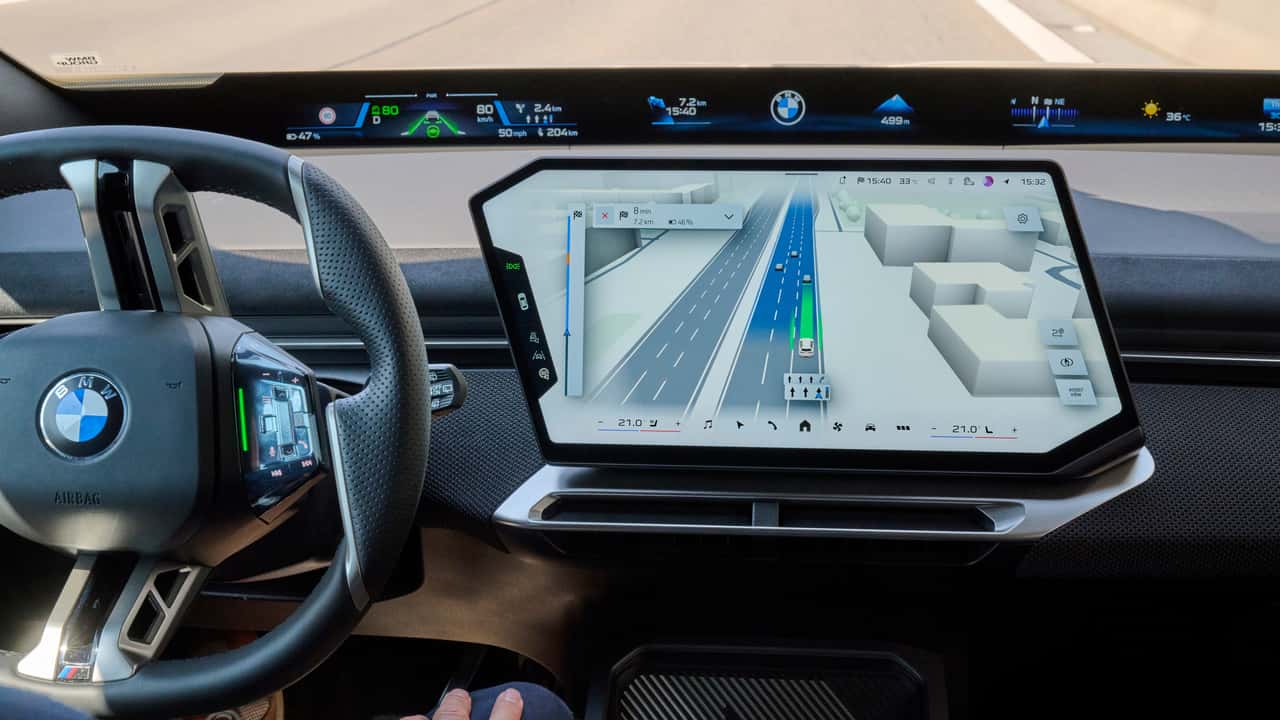
One of the clearest trends is the growing importance of software and advanced driver assistance. BMW’s next-generation iX3 is expected to introduce an updated interface that combines navigation information and driver-assistance data into one view. The goal is to make the vehicle’s systems easier to understand while reducing the separation between route planning, safety alerts, and automated driving functions. This reflects a broader industry effort to make electric vehicles feel more intelligent and integrated rather than simply replacing an internal-combustion powertrain with a battery.
At the same time, companies are taking very different approaches to automated driving. Einride has received a permit allowing its Level 4-capable electric truck to operate on Germany’s public roads, marking a significant step for autonomous freight. Level 4 systems can perform driving tasks without human intervention within defined conditions, making them especially attractive for repeatable commercial routes. Other companies are moving more cautiously. Hyundai has indicated that it does not want to rush a partially automated system to market merely to compete with existing Level 2 or so-called Level 2++ products. Its own advanced driver-assistance platform is now expected later, illustrating how manufacturers are weighing marketing pressure against safety and engineering readiness.
Commercial vehicles are another major focus of the current EV landscape. The new ETT 44 electric semi reportedly pairs a huge 651-kilowatt-hour battery with megawatt charging capability, targeting long-distance freight operations in Europe. Meanwhile, an American-built electric big rig is taking a different approach by prioritizing payload over maximum range. These contrasting strategies highlight one of the central challenges in electric trucking: fleets need enough battery capacity to complete demanding routes, but every additional battery cell adds weight, cost, and charging requirements. The most successful trucks may ultimately be designed around specific freight corridors rather than a single universal specification.
Passenger vehicles are also being shaped by the tension between affordability and capability. Future Volvo XC60 and XC90 plug-in hybrids are expected to offer substantially more electric range than today’s models, potentially allowing many drivers to complete routine trips without using gasoline. For households that cannot yet rely entirely on public charging or do not want to purchase a full EV, longer-range plug-in hybrids could provide a transitional option. However, consumer expectations continue to rise. Buyers want more range, lower prices, and no loss of comfort, performance, or features, even though larger batteries and advanced technology inevitably raise production costs.
Pricing remains a critical issue. New vehicles have become more expensive in the United States, but recent pricing trends may give EV shoppers a reason to reconsider electric models. Discounts, incentives, and changing demand have created situations in which some EVs are more competitively priced than comparable gasoline vehicles. A small electric vehicle priced below $15,000, including its equipment, would be particularly notable in a market where affordability has become one of the biggest barriers to adoption. Low-cost EVs could broaden access, although manufacturers must still overcome concerns about safety, reliability, range, and availability.
Efficiency is becoming just as important as battery size. A near-production electric concept based on the same foundations as Volkswagen’s ID. Polo is reportedly designed to push efficiency to an extreme. Rather than relying only on a larger battery to increase driving distance, highly efficient vehicles reduce energy consumption through improved aerodynamics, lower weight, optimized motors, and better software. This approach could help lower costs and reduce the demand for raw materials.
Not every EV program is advancing as planned. The number of paused, canceled, or delayed electric vehicles continues to grow as automakers respond to policy changes, uneven consumer demand, and the cost of developing new platforms. Political uncertainty is also affecting the market. Debate in Washington over Chinese automakers, imported vehicles, connected-car technology, and domestic manufacturing is likely to influence which models can be sold, where they can be built, and which components qualify for incentives. Comments suggesting that domestically produced Chinese-connected technology could be acceptable nevertheless underline how difficult current laws and supply-chain rules can make such arrangements.
Charging infrastructure is expanding despite these complications. A manufacturer-backed American charging network continues to grow, while autonomous ride-hailing services are spreading to new cities such as Las Vegas. Competition between robotaxi operators is increasing as companies attempt to prove that electric and autonomous transportation can work at commercial scale. The arrival of new services will also test local regulations, public acceptance, vehicle utilization, and the ability of charging networks to support high-mileage fleets.
The industry is also paying closer attention to durability and performance. A high-mileage electric taxi that remains on its original battery and motors while continuing to drive like new offers an important counterpoint to concerns about battery degradation. Meanwhile, discussions of electric power figures are becoming more sophisticated. Peak power, available for short bursts, is different from sustained power, which determines how long a drivetrain can maintain performance. This distinction matters for towing, commercial vehicles, track use, and real-world driving.
Finally, competition is becoming increasingly global. Li Auto, once expected to wait until 2028 before expanding internationally, now plans to launch an EV outside China sooner than anticipated. Space-related technology partnerships may also influence the development of future performance vehicles, showing how automakers are searching beyond the traditional automotive sector for expertise.
Taken together, these stories reveal an EV market moving from rapid experimentation toward a more selective and competitive stage. Progress is continuing in batteries, charging, software, autonomy, commercial transportation, and vehicle efficiency, but companies must now demonstrate that their products are affordable, dependable, legally compliant, and genuinely useful. The next phase of electric mobility will likely be defined less by headline specifications alone and more by how well vehicles fit into everyday life, commercial operations, and evolving public policy.
All EV Sales Research Team
9/15/2026